


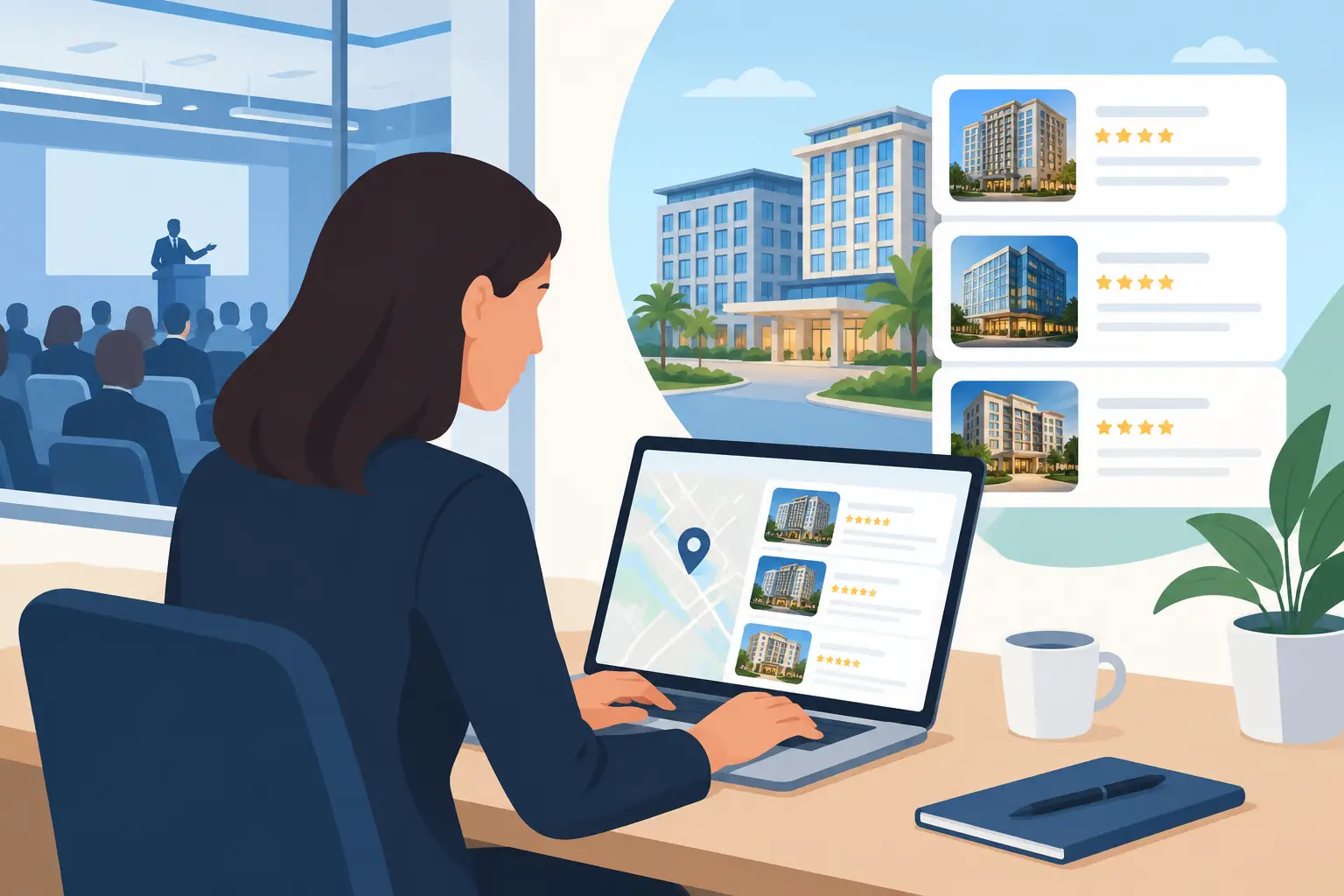
A conference hotel can look ideal on paper and still create problems on the day. The meeting room may be the right size, but bedrooms could be split across several floors, parking may be limited, or the delegate rate may not apply to everyone travelling. Knowing how to source conference hotels properly means looking beyond a polished brochure and finding a venue that works for the event, the budget and the people attending.
For organisations running member events, training, annual conferences or leadership meetings, the process can quickly absorb more time than expected. Availability changes, requirements develop and each venue presents its information differently. A clear method makes the decision easier to manage and gives colleagues confidence that the practical details have been considered.
Start with a brief that a hotel can act on
The quality of the venue options you receive depends on the quality of the brief you send out. Before approaching hotels, establish the non-negotiables and separate them from preferences. This avoids comparing venues that were never a realistic fit.
Start with the purpose of the event. A residential strategy meeting needs a different setting from a large member conference, a sales training day or an awards dinner. Consider the atmosphere required as well as the timetable. If delegates need focused discussion, a busy city-centre hotel with limited breakout space may be less suitable than a quieter property with dedicated meeting facilities.
Your brief should cover the proposed dates, flexibility around those dates, expected delegate numbers and event format. Include the number and style of meeting rooms, breakout requirements, bedroom numbers, catering, accessibility needs, technology, parking and preferred location. If attendees will arrive by rail, say so. If a proportion are travelling from across the UK, a location near major road and rail links may matter more than being in a particular city.
It also helps to be honest about budget parameters. You do not necessarily need a fixed figure at the outset, but a realistic range allows suitable options to be prioritised. Be clear whether the budget needs to include meeting space, catering, bedrooms, dinner, drinks, AV and any overnight costs. A low day delegate rate can be misleading if essential items sit outside it.
How to source conference hotels with the right shortlist
A long list is not a useful outcome. A good shortlist gives decision-makers a manageable choice of venues that meet the core brief, while making the important differences clear.
Begin with location, but avoid treating distance as the only measure of convenience. A hotel just outside a city may offer better parking, more space and stronger value, while a central venue may reduce taxi journeys and make attendance easier for rail travellers. The right answer depends on who is coming, when they are travelling and whether delegates will stay overnight.
Then assess the event spaces in relation to the agenda. Ask whether the main room can be set in the preferred layout without feeling cramped, and whether it has natural daylight if that is important. Check where the breakout rooms are located. Delegates lose time and momentum if every workshop requires a walk through public areas or a move to another floor.
For residential conferences, review bedrooms as carefully as the meeting rooms. Confirm the number available on the required nights, the room types included in the rate and whether the hotel can hold rooms until delegates confirm. This is particularly relevant for membership organisations where attendance can change close to the event. A venue that can offer a sensible release date and a clear process for substitutions can remove a great deal of administration.
A practical shortlist normally includes a mix of options. One venue may be the strongest fit overall, another may offer more flexibility, and a third may provide a lower-cost alternative. The aim is not to produce endless choice. It is to make the trade-offs visible.
Compare the full cost, not just the headline rate
Hotels package conference costs in different ways. Some quote a day delegate rate that includes room hire, refreshments, lunch and basic AV. Others quote each item separately. For overnight events, bedroom rates may or may not include breakfast, VAT or parking.
Request a written breakdown that shows what is included, what is provisional and what could be added later. Check room hire, minimum spend requirements, catering, private dining, AV equipment, Wi-Fi, staffing, service charges and overnight accommodation. If you need a screen, projector, microphones, staging or hybrid meeting support, establish this early. Technical costs can change the comparison significantly.
Also look at the conditions attached to the price. A lower rate may require a higher bedroom commitment, a restrictive cancellation schedule or an early decision. That may be entirely acceptable if delegate numbers are stable. If attendance is uncertain, flexibility can be worth more than a small saving on the initial quote.
The same applies to food and drink. Ask about dietary requirements, service timings and where breaks will be served. A pleasant lunch is not enough if it causes a delayed afternoon agenda or queues that leave little time for networking.
Check the delegate experience before you commit
The venue is part of the event experience. Delegates will notice how easy it is to find, whether check-in is efficient, the quality of the meeting environment and how well staff respond when something changes.
A site visit is valuable for larger, higher-profile or more complex events. It allows you to walk the delegate journey from arrival to registration, meeting rooms, refreshments, bedrooms and dinner. You can test the practical points that are difficult to judge from photographs: signage, mobile signal, acoustics, lift capacity, accessible routes and the distance between spaces.
If a visit is not possible, ask focused questions and request a floorplan. Confirm who will be the hotel contact on the day, whether there is an event manager assigned and how last-minute requests are handled. For an event with speakers, exhibitors or a formal dinner, these operational details matter as much as the room dimensions.
Do not overlook accessibility. Ask about step-free access, accessible bedrooms, hearing support, dietary provision and accessible parking. Requirements should not be treated as an afterthought. Addressing them at the sourcing stage helps every delegate participate properly and prevents avoidable changes later.
Manage availability and decision-making carefully
Conference hotel availability can move quickly, particularly for popular dates and locations. Once suitable venues have been identified, agree a clear internal decision process. Know who needs to approve the choice, what information they require and when a decision can realistically be made.
Ask venues to hold space where possible, but confirm the expiry date and what is being held. A provisional hold is useful only if it is followed up before it lapses. Keep a simple record of quotes, inclusions, key terms and decision dates so that comparisons remain accurate when several people are involved.
When reviewing options, resist choosing solely on familiarity. A hotel used successfully in the past may still be right, but it may not suit a changed delegate profile, revised budget or different format. Equally, an unfamiliar venue does not need to be discounted if it meets the brief and has been checked carefully.
Once the venue is selected, capture every agreed point in writing. This includes room layouts, catering times, bedroom allocation, meeting package inclusions, AV, accessibility arrangements and payment schedule. A clear handover document is useful whether the event is managed internally or with external support.
Know when to bring in venue finding support
Sourcing a single meeting room can be straightforward. It becomes more demanding when the event includes bedrooms, multiple breakouts, a dinner, changing delegate numbers or a difficult date. It can also be time-consuming when an internal team is already managing member communications, speakers, registrations and day-to-day operations.
An experienced venue finding partner can turn a detailed brief into a focused search, approach appropriate hotels, compare proposals and highlight the questions that need answering before a commitment is made. That does not remove your control over the decision. It gives you better information and reduces the administrative load involved in getting there.
Craven Business Solutions supports organisations that need practical, personal help with venue sourcing across the UK and internationally, particularly where internal capacity is limited. The value is often in the detail: understanding what the event needs to achieve, keeping the search on track and helping the organiser avoid spending hours chasing incomplete information.
The best conference hotel is rarely the one with the most impressive lobby or the lowest first quote. It is the one that lets your delegates arrive easily, participate comfortably and leave feeling the event was well organised.
Leave a Reply